
Article
Bedtime unwind sequence
Movement can calm your system just as much as it can wake it up. This short bedtime routine helps your body shift from “go” to “rest” by easing tension, quieting the breath, and signaling safety to your nervous system.
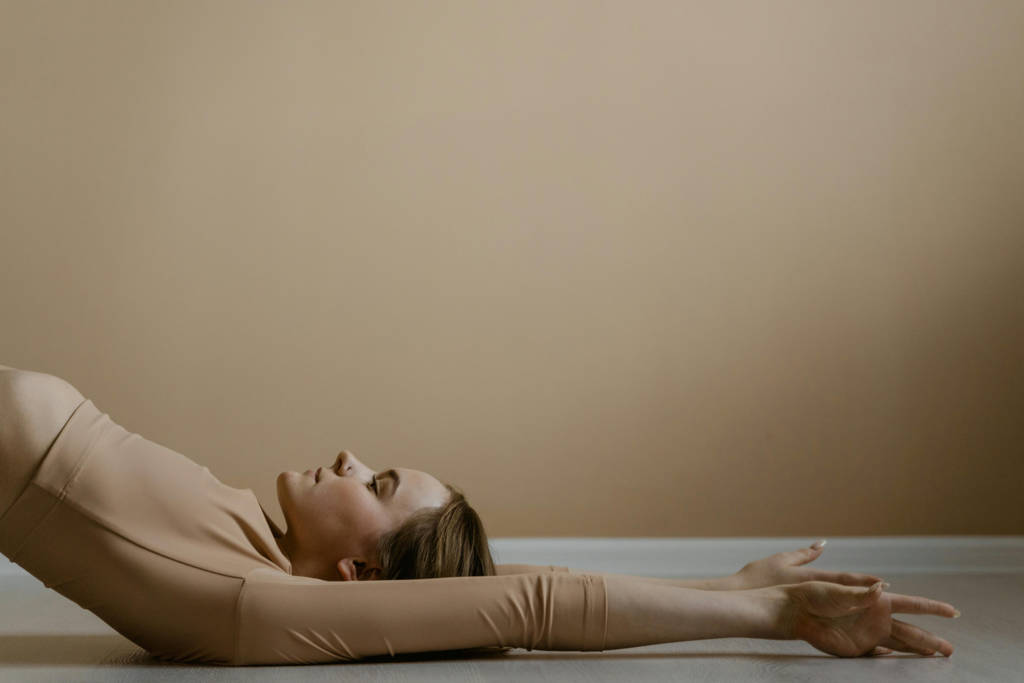
Goal
To prepare your body and mind for rest — not by stretching hard, but by letting go of the day’s tension and reconnecting to calm, smooth breathing.
- Reduce stiffness from long days of work, sitting, or stress.
- Relax the low back, hips, and shoulders.
- Encourage slower breathing and a relaxed heartbeat.
Before you start
- Find a quiet, dimly lit space.
- Use a yoga mat, rug, or even your bed.
- Breathe through your nose whenever possible.
- Move slowly — imagine your body “melting” instead of stretching.
The 5-Minute Bedtime Unwind
Minute 1 — Breathing & Grounding
- Lie on your back with knees bent, feet flat on the floor or bed.
- Place one hand on your chest, one on your belly.
- Inhale softly through your nose, feeling the lower hand rise first.
- Exhale longer than you inhale, letting your body sink into support.
Cue: Think “quiet inhale, heavy exhale.” Feel your ribs and hips soften toward the surface beneath you.
Minute 2 — Hip Release
- With knees bent, gently let both knees fall to one side, then the other.
- Move slowly — like windshield wipers — keeping shoulders relaxed.
- Breathe with the movement, letting hips roll easily.
Feel: Low back and hips unwinding, no forcing or pulling.
Minute 3 — Shoulder & Upper Back Ease
- Bring arms out to the sides like a “T”.
- Take a soft inhale, then gently roll your head to one side as your knees fall to the opposite side.
- Alternate sides, 3–4 times each, moving with the breath.
Cue: Eyes follow your head; breath follows your movement.
Minute 4 — Hamstring & Back of Leg Soother
- Hold the back of one thigh and gently straighten and bend the knee 5–8 times.
- Switch sides.
- Keep the movement easy — just exploring, not forcing range.
Feel: Gentle glide through the back of the leg, like oiling a hinge.
Minute 5 — Calming Reset
- Lie flat or with a pillow under your knees.
- Close your eyes and take 5 slow breaths.
- With each exhale, let the shoulders drop and the jaw unclench.
- Notice any areas still holding tension, and imagine them softening.
Cue: Nothing to fix — just breathe, feel heavy, and let the body rest itself.
Optional add-ons
- Soft background music or white noise.
- A warm compress on the low back or neck.
- Dim lighting or candlelight to cue your brain it’s time to rest.
When to use it
- Right before bed or anytime you feel wound up.
- After long days of physical work, screens, or stress.
- As a transition between day mode and rest mode.
Tips for better sleep posture
- Try a small pillow under the knees when lying on your back.
- If you’re a side sleeper, put a pillow between the knees to reduce hip and low-back tension.
- Keep your neck in a neutral position — not cranked up or down.
Sleep isn’t just the absence of movement — it’s the reward your body earns when you let go of unnecessary tension. Move gently, breathe softly, and give your system permission to rest.